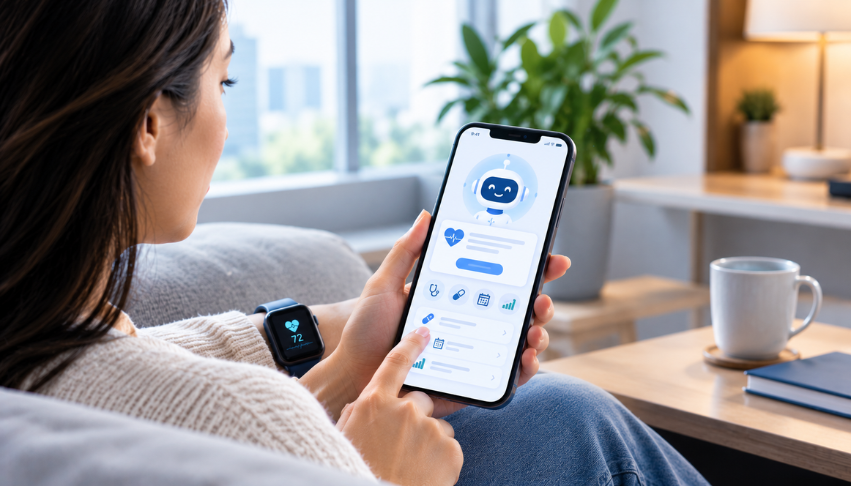
How AI Health Assistants Are Changing Everyday Healthcare
Healthcare is becoming increasingly digital, and Artificial Intelligence (AI) is moving beyond hospitals and research labs into everyday health experiences. AI-powered health assistants can help people understand health information, organize personal records, and ask questions about symptoms, medications, nutrition, and wellness. Consumer tools like MedicalGPT are one example, designed to make general health information easier to understand and manage. They are not clinical decision systems.
Unlike traditional healthcare software built mainly for providers, consumer-facing AI assistants are designed around the everyday needs of individuals. People may use them to better understand information from a healthcare visit, make sense of a lab report, organize medications, or explore general health and wellness topics. Recent research shows that people are increasingly turning to AI chatbots for these kinds of health questions, including understanding lab results and diagnoses.
MedicalGPT focuses on this everyday side of digital health: you can explore general health information, analyze uploaded reports, build workout and diet plans around your goals, track symptoms, and keep medications and health records organized in one place. It does not diagnose conditions or recommend treatments, and it is not a substitute for care from a licensed professional.
Understand your health information better—while knowing when to seek professional care.
AI health assistants can make complex information easier to understand, but they still have important limitations. An AI system cannot physically examine you, perform a clinical test, or replace the judgment of a qualified healthcare professional. Its answers can also be incomplete or incorrect, so important health decisions should always be discussed with an appropriate medical professional.
The growing use of AI in healthcare also highlights the importance of responsible design. As health assistants become more capable, developers and healthcare organizations are focusing on accuracy, transparency, privacy, and appropriate human oversight. Current healthcare research emphasizes that patient-facing AI should be evaluated carefully and used with safeguards, particularly when health information could affect decisions about care.
Privacy matters too. Health information can be highly personal, so users should understand how an AI health tool handles the information they provide. Before using any digital health service, review its privacy policy and understand how your information is stored and used. You can read ours on the Privacy Policy page.
In conclusion, AI health assistants are becoming a growing part of how people access and understand health information. MedicalGPT is designed as an everyday health companion for general information, wellness planning, symptom tracking, report summaries, and organizing health information. It is not a replacement for professional medical care. For diagnosis, treatment, or urgent concerns, always consult a licensed healthcare professional.